

We all know that 98.6° F is human body temperature … only it isn’t. A new study reconfirms something extensively covered during the COVID pandemic: Normal human body temperature falls between 97.3° and 98.2° F — with 97.9° F as today’s average. And 5 grams per week is the amount of plastic every person consumes … only it isn’t.…
Driving sustainability through more eco-friendly laboratory equipment choices

Working in a laboratory, you cannot help but notice the amount of waste material and energy use that comes from experiments. From the frequent use of single-use plastics and a reliance on transnational shipping of reagents, to the dependency on high-energy-consumption equipment like -80° C freezers for the long-term storage of samples, there is…
Thermo Fisher Scientific sets 2030 renewable goal with solar developer ib vogt

Thermo Fisher Scientific Inc. has announced a 15-year virtual power purchasing agreement (VPPA) with international solar developer ib vogt. Thermo Fisher’s 91-megawatt portion of the Serbal solar project will deliver approximately 192,000 megawatt hours of renewable electricity annually. Eurofins Scientific, a bioanalytical testing company, collaborated in the aggregated deal for a 36-megawatt portion of the…
R&D 100 of the day: Brine Concentration with FilmTec Fortilife XC120 membranes
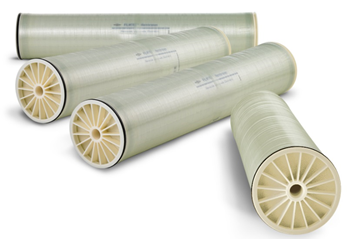
Systems using the new innovative FilmTec Fortilife XC120, a spiral-wound reverse osmosis element from from DuPont Water Solutions, achieve water concentrations beyond 80,000 ppm to ~120,000 ppm of total dissolved solids while operating within the pressure limits of standard available reverse osmosis equipment. Reaching these concentrations pushes the overall water recovery up from 90% to…
R&D 100 winner of the day: Green Machine — using hydrothermal technology to separate and recycle polyester and cotton blends
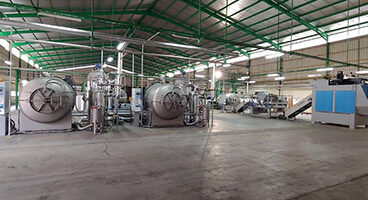
Cotton and polyester blended-fiber fabrics have been extensively used by clothing manufacturers, and these materials have made up a considerable number of garment wastes disposed of by consumers. Green Machine uses The Hong Kong Research Institute of Textiles and Apparel Limited (HKRITA)’s hydrothermal technology to separate PET-cotton blended textile fibers and decolor the PET fiber…
R&D 100 winner of the day: City Buildings, Energy, and Sustainability (CityBES) Web Tool for Climate Change Strategies

Buildings generate 39% of global CO2 emissions. Decarbonizing the building sector and improving the climate resilience of buildings are essential to the global clean economy. However, evaluating and prioritizing cost-effective technical solutions for individual buildings at city scale poses a significant challenge for city stakeholders. City Buildings, Energy and Sustainability (CityBES), developed by Lawrence Berkeley…
Grengine is first plug-and-play, portable storage system that provides green energy
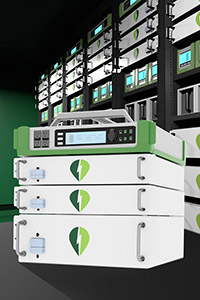
Grengine, a developer of the world’s first stackable, modular energy storage system, announces it has named Erin Rand as its new CEO, while founder and former CEO, Connie Stacey, will move into a new role as CTO. Formerly known as Growing Greener Innovations, the company also publicly announced its new corporate brand: Grengine. The new…
R&D 100 winner of the day: BioManIAC: Bioplastics Manufacturing with Intelligent Adaptive Control

Oil-derived, single-use plastics are designed to be disposed of immediately after use, but they persist in the environment for much longer. These plastics take decades to degrade and are a huge source of pollution around the world. Despite the urgency to replace traditional plastics with sustainable alternatives, bioplastics are still decades away from meeting the…
The pizza box problem — and why it might kill everything from Teflon to drugs

By Mark Jones It looks innocuous in my hand, yet there are growing calls to ban it. It may use technology created for the Manhattan Project, but, in my hand, it doesn’t feel like a weapon. It feels natural, in spite of the very unnatural materials it may contain. I’m not at all cautious as…
IACMI receives funding renewal from the DOE to continue composite R&D
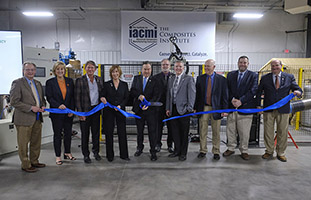
The Institute for Advanced Composites Manufacturing Innovation (IACMI), headquartered in Knoxville, Tennessee, has announced it is receiving a funding renewal from the Department of Energy (DOE). IACMI becomes the first clean energy institute to be renewed by DOE. IACMI will be receiving federal funding across five fiscal years, with a first-year investment of $6 million…
Thermo Fisher Scientific to power all current U.S. sites with 100% renewable electricity

Thermo Fisher Scientific Inc. announced it will power all the company’s current U.S. sites with 100% renewable electricity by 2026. The company’s new 20-year virtual power purchasing agreement with EDF Renewables includes the full output of the 200-MW Millers Branch Solar project. The agreement with EDF Renewables will deliver approximately 545,000 MWh of renewable electricity…
Metaspectral wins funding from Canadian Space Agency to develop greenhouse gas monitoring method

Metaspectral, a software company, has received funding as part of the smartEarth Canadian Space Agency initiative to build a method to systematically and methodically quantify the carbon dioxide (CO2) levels present at ground-elevation using hyperspectral data. Metaspectral has created a hybrid on-premise and cloud-based software platform that is used in a variety of industries to…
A look at five of the best-read stories of 2022
2022 has been a busy year for the R&D community, from the continuing fight against the COVID-19 pandemic to the repercussions on the economy and funding for future research. We’ve seen some amazing breakthroughs and innovations — and welcomed back the R&D 100 Awards banquet dinner. It’s been a busy year in the industry. Here’s…
Industry partners use ORNL software to trim carbon footprint of buildings

From Oak Ridge National Laboratory: Two years after the U.S. Department of Energy’s Oak Ridge National Laboratory provided a model of nearly every building in America, commercial partners are using the tool for tasks ranging from designing energy-efficient buildings and cities to linking energy efficiency to real estate value and risk. International companies like Google…
SwRI, Tec de Monterrey collaborate to advance sustainable manufacturing
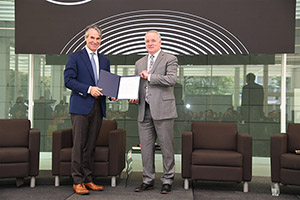
From Southwest Research Institute Leaders of Southwest Research Institute (SwRI) and Tecnológico de Monterrey (Tec de Monterrey), a private, nonprofit, independent university based in Monterrey, Mexico, launched a new research initiative to advance sustainable manufacturing practices that protect the environment while developing materials and technology. SwRI President and CEO Adam Hamilton, P.E., and Dr. Guillermo…
Rensselaer researchers to focus on improving life and efficiency of nuclear reactors
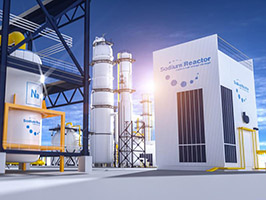
Rensselaer Professor Jie Lian has been awarded $500,000 from the U.S. Department of Energy as part of the Nuclear Energy University Research Program (NEUP) to conduct research and develop new materials that will make advanced nuclear reactors more resilient and economically efficient. Dr. Lian, the principal investigator of the project, will be joined by collaborators…
Glowing rocks, a new sport, and what we can learn about different approaches
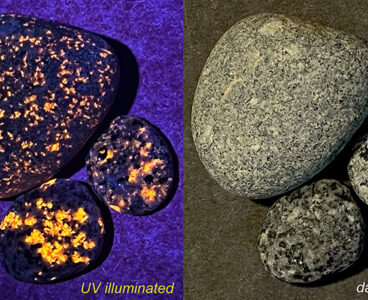
By Mark Jones I’ve discovered a new sport, one made possible by Erik Rintamaki. No, he’s not the inventor of pickleball — and the sport I found is not the fastest growing in the U.S. My new sport is a bit more scientific and, for R&Ders, it comes with a useful allegory. The sport I…
Designer materials to keep plastic out of landfills
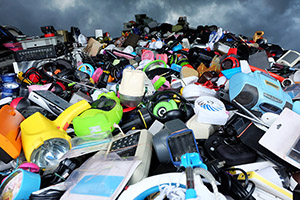
From Berkeley National Lab, By Alison Hatt Scientists have designed a new material system to overcome one of the biggest challenges in recycling consumer products: mixed-plastic recycling. Their achievement will help enable a much broader range of fully recyclable plastic products and brings into reach an efficient circular economy for durable goods like automobiles. We…
Researchers measure photovoltaic external quantum efficiency to transform the future of solar cells

Researchers at Swansea University, U.K., have proven that it is possible to achieve near-unity charge generation quantum yields in organic solar cells. These findings present a route for designing and constructing higher-performance solar cells, which help to secure the future using renewable energy sources to meet sustainability goals. The research, led by Dr. Wei Li…
Argonne webinar to explore the challenges of recycling lithium-ion batteries and solutions

Auto makers are racing to produce electric vehicles, but few firms know how to recycle old EV batteries. A scientist at Argonne National Laboratory is hosting a 15-minute webinar on June 29 at 1 p.m. CT that will describe the path businesses can take to recycle those batteries profitably. In 2020, over 1.7 million electric…
U.S. DOE grants $25M to advance clean hydrogen technologies for electricity generation
From the U.S. Department of Energy The U.S. Department of Energy (DOE) has announced $24.9 million in funding for six research and development projects to support the advancement of clean hydrogen for electricity generation. DOE will partner with private companies to research advanced technology solutions that could make hydrogen a more available and effective fuel…
Advanced Ionics secures $4.2M for decarbonization of industrial hydrogen production
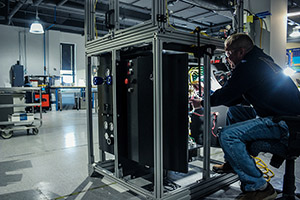
Advanced Ionics, a provider of next-generation industrial electrolyzers that can produce hydrogen for less than $1/kg, has announced the closing of its initial financing of $4.2 million led by Clean Energy Ventures, a venture capital firm funding early-stage climate tech innovations, with participation from SWAN Impact Network. By requiring significantly less electricity than other electrolyzers,…
MilliporeSigma’s ZooMAb antibodies earns first-ever ACT Label from My Green Lab

MilliporeSigma, the U.S. and Canada Life Science business of Merck KGaA, Darmstadt, Germany, a science and technology company, has announced that its ZooMAb recombinant antibodies platform earned Accountability, Consistency and Transparency (ACT) label from My Green Lab, a non-profit organization dedicated to creating a culture of sustainability in science. The first-ever antibody to achieve ACT…
The R&D 100 winner of the day: Eco-Mobility with Connected Powertrains
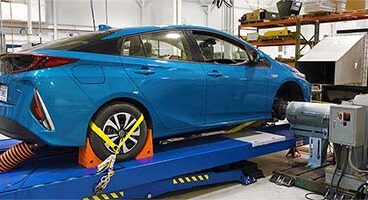
Southwest Research Institute developed Eco-Mobility with Connected Powertrains with Toyota Motor North America and the University of Michigan to achieve over 20% energy savings and reduced carbon emissions in connected and automated vehicles. This technology features algorithms, software and testing tools for route, speed profile and power flows to lower fuel consumption by leveraging vehicle-to-vehicle,…
Argonne to host webinar exploring benefits of replacing fossil fuels with hydrogen

Join Argonne experts for “Science at work: Combating climate change with hydrogen,” at 11:00 a.m. CDT, Wednesday, May 11, 2022, as they explore the environmental and economic benefits of replacing fossil fuels with hydrogen. Replacing fossil fuels with hydrogen could turn manufacturing and transportation into green industries. Companies can use hydrogen to reduce their carbon…